
Insulated Roofing Panels Buyer's Guide for Aluminium Pergolas
Published: June 10, 2026
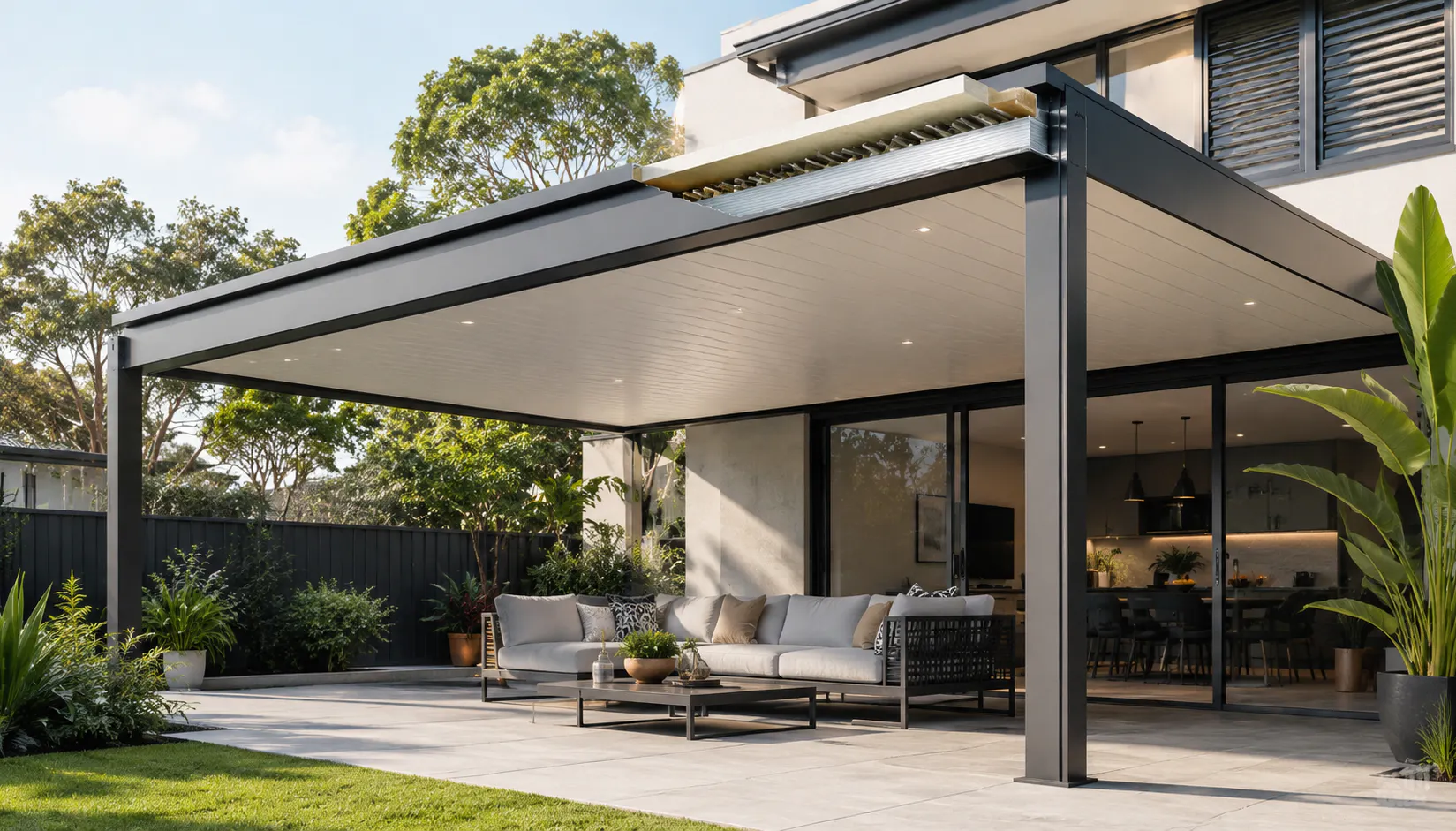
Table of Contents
- 01
- 02
- 03
- 04
- 05
- 06
- 07
- 08
- 09
- 10
Choosing insulated roofing panels comes down to how you plan to use the space. If it's over a carport or a walkway, a standard single-skin Colorbond® roof will do. But if you want to entertain friends and family under a cool, shady aluminium pergola in the summer heat, an uninsulated roof simply isn't up to it. With an insulated roofing panel, you can use your pergola in winter too. This insulated roofing panels buyer's guide walks you through choosing the right panel and getting the frame underneath it right, which is where most pergola structures tend to go wrong.
Key Takeaways
- An insulated roofing panel gives you the chance to use your pergola year-round in Australian weather.
- The frame holding up the panel is what decides whether the roof lasts, so it’s important to choose the two together with a proper span guide.
- The cost of an insulated panel depends on various factors, including size, panel thickness, profile, and whether your pergola is freestanding or attached.
What is an Insulated Roof Panel Made Of?
An insulated roofing panel is like a sandwich.
The top layer is Colorbond® steel, which is the same coloured steel you see on house roofs across Australia.
The middle layer is a thick layer of foam. This part keeps the heat out.
The bottom is another sheet of steel, already painted, which acts as the ceiling for your pergola.
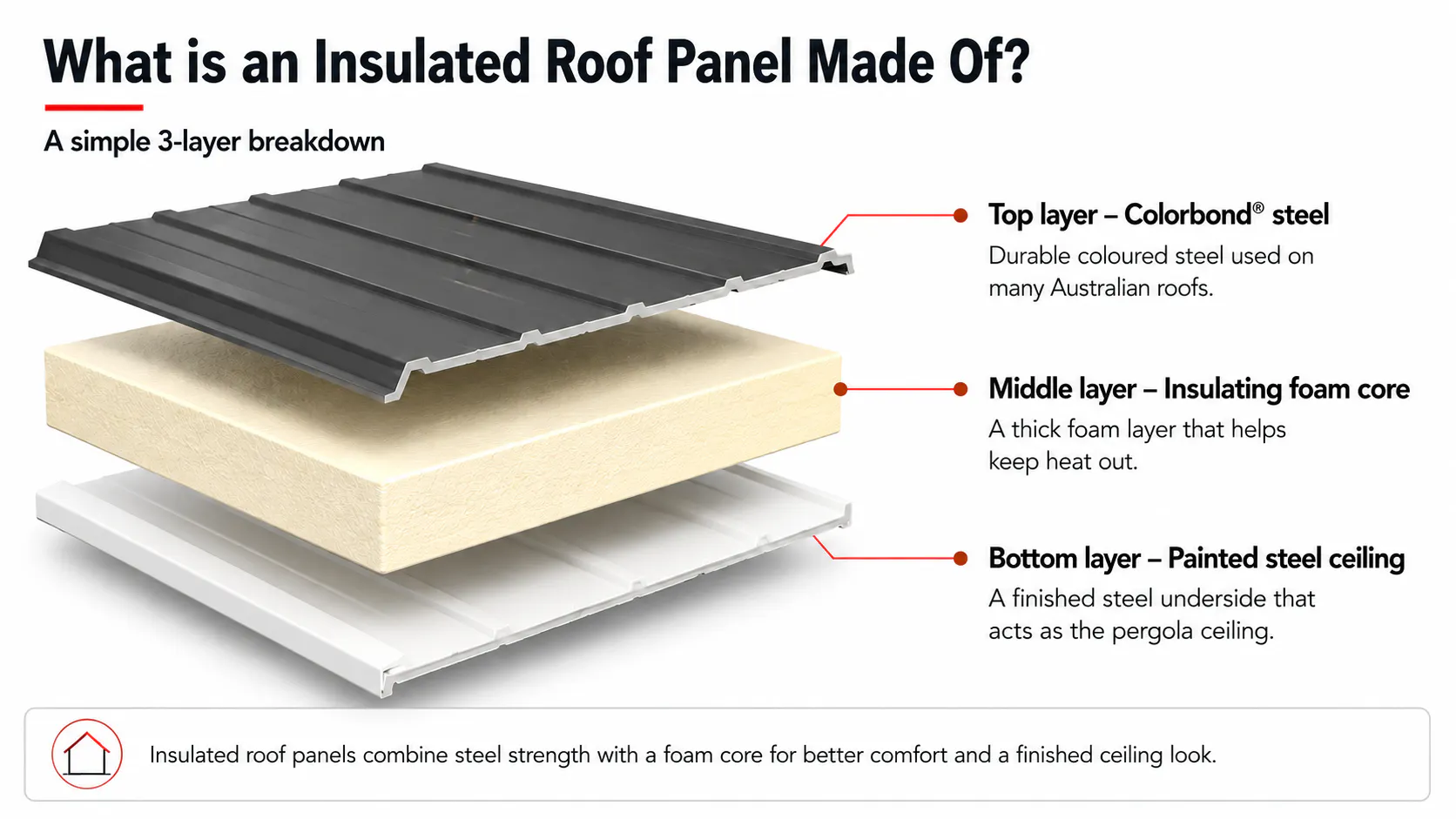
Contrastingly, a plain single-skin Colorbond® roof is just one sheet of steel with none of the layers protecting you from harsh weather.
If you want an uninsulated roof to keep the heat out, you have to add insulation and a separate ceiling underneath, which means more materials, more labour and more cost. An insulated panel skips all of that.
How Much Do Insulated Roof Panels Cost in Australia?
The cost of an insulated roofing panel for a pergola varies based on several factors:
- Size: Cost scales with the area you're covering, usually worked out per square metre.
- Panel thickness: Thicker panels cost more but span further and insulate better, so a thicker panel can sometimes mean fewer posts.
- Profile and finish: Trim Deck or Corrugated, plus your ColorBond® colour choice, shifts the price.
- Freestanding or attached: A freestanding pergola’s roofing system costs more than an attached pergola structure.
- Approval and drainage: An insulated roof generally needs building approval, and the runoff has to connect to stormwater, both of which add to the total.
Of these, freestanding versus attached is one of the biggest swings in the quote. An attached pergola borrows support from your house wall and uses fewer posts, so it's usually cheaper to build. A freestanding pergola’s roof, on the other hand, carries the whole load on its own. We break down the full cost and design trade-offs in our guide to freestanding vs attached aluminium pergola.
Benefits of Insulated Panels to Reduce Heat and Noise
A bare metal roof has three problems once you actually sit under it.
It gets hot.
It's loud in the rain.
And in winter it drips.
An insulated roofing panel deals with all three. Here's how.
1. Heat
Steel soaks up the sun and radiates that heat straight down at you. It's why a plain ColorBond® patio can be unbearable by mid-afternoon in summer. The foam core in an insulated panel breaks that path, so less heat comes through and the underside stays closer to the air temperature around you. It won't feel air-conditioned since no outdoor roof does, but you'll definitely be able to sit under your pergola at 3pm with your loved ones.
2. Rain noise
Rain on bare metal drums loudly enough to drown out conversation. The foam core absorbs a lot of that sound, so a downpour becomes background noise instead of something you have to talk over.
3. Condensation
This is the one people don't see coming. On a cold night, the underside of a single-skin metal roof gets cold enough that moisture in the air forms droplets on it, and they drip down. An insulated panel keeps its inner surface warmer, so it doesn't reach that point. No cold-weather drip onto your furniture or floor.
Insulated roofing panels buyer's guide extra tips:
An insulated panel makes the space far more comfortable and usable year-round, but it won't make it feel air-conditioned. The difference you feel depends on things you can plan for. A thicker core handles more heat, open sides let warm air escape, and a ceiling fan covers the rest on the worst days. Decide how you'll use the space first, then match the panel to it.
How to Choose an Insulated Roofing Panel for Your Pergola
Consider these three factors to choose an insulated roofing panel for your pergola:
- Check your roof pitch: How flat the roof sits decides what's possible. Near-flat needs a low-pitch profile; a steeper roof opens up more options.
- Pick the profile: Trim Deck (flat, squared ribs) drains down to 2 degrees and suits modern near-flat roofs. Corrugated (the classic wavy sheet) needs 5 degrees or more to avoid pooling and leaks.
- Set the thickness: Around 100mm suits most open pergolas; go thicker for an enclosed, year-round room. Thinner panels save money, but you’ll spend more on posts which let more heat through compared to a thicker insulated roofing panel.
A constructor can confirm all three factors against your span before you order.
Don't Overlook the Aluminium Pergola Frame
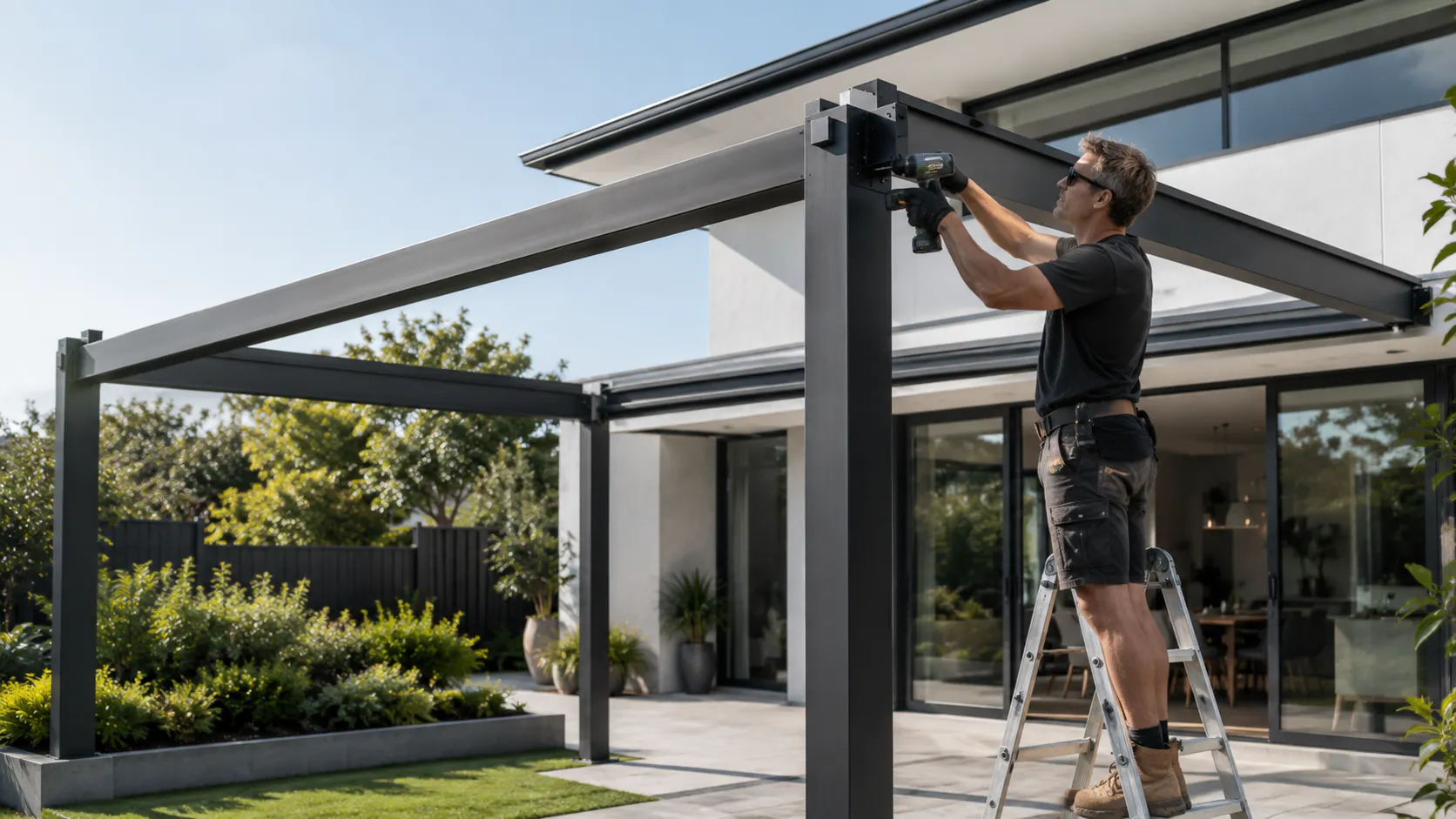
You're here to compare panels. But the panel rarely fails, and it's not where your money is best spent. What you should be evaluating is the frame holding it up.
Since an insulated panel is heavy and stiff, it only works when the structure under it can carry that weight and stay put in strong wind. Get the frame wrong, and this is what happens to your pergola's insulated panel:
- The roof sags between the posts.
- It leaks where it meets the house.
- A council or private certifier won't sign it off, because there's no engineering to prove the structure meets the wind-load standard for pergolas.
This is why the panel and the frame have to be chosen together. How far a panel can stretch between posts depends on the beams holding it up. A thicker panel can reach further with fewer posts. A thinner one needs more support.
The frame's material changes the result too. For a pergola, aluminium frames beat timber and steel. Aluminium is light, so it's easier to put up and puts less strain on the footings. It's also strong enough for long spans. Plus, aluminium won't rust, rot, warp or attract termites, unlike timber.
Insulated Panels vs Colorbond® vs Polycarbonate for Your Pergola
Insulated panels aren’t the only available option for sheltering your pergola. Most aluminium pergolas end up with one of these three roofs: an insulated panel, single-skin Colorbond®, or polycarbonate. The right choice of roofing depends on what you want the space to do.
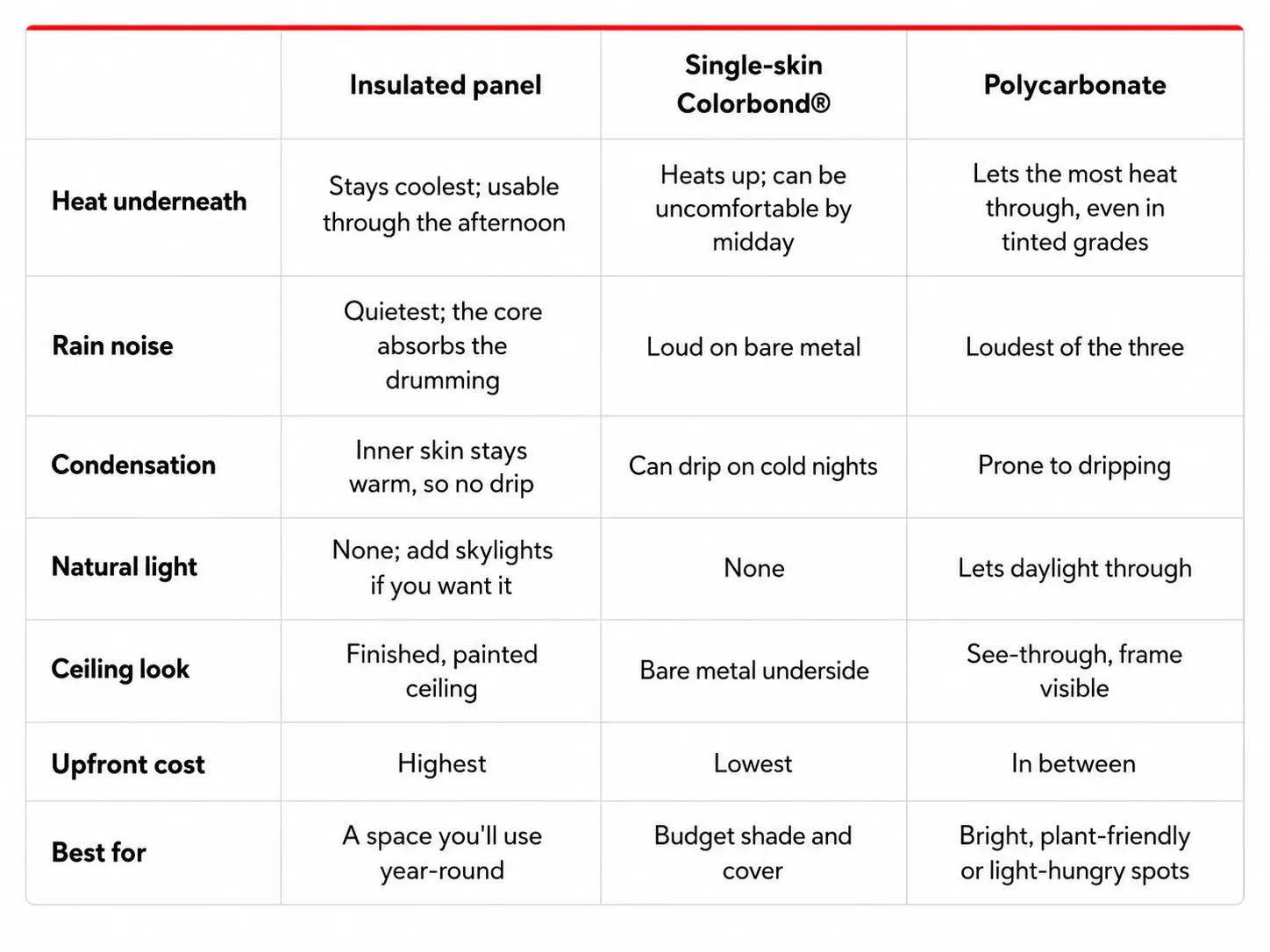
Polycarbonate is the pick when you want light coming through and don't mind the heat and noise that follow. If you want a budget option with just shade and cover, then Colorbond® is a fair choice.
An insulated panel costs the most upfront, but it's the only one of the three that gives you a comfortable and well-finished ceiling. This is what you should aim for if the pergola is a space you'll use frequently.
Frequently Asked Questions
How long do insulated roof panels last?
Quality insulated roof panels generally last 20 to 30 years with basic maintenance, and most come with a manufacturer's warranty.
Can I install insulated roof panels myself?
Some kits are made for DIY, but the frame still has to be engineered and fixed to handle the wind load. The panel going on is the easy part; the structure carrying it is not.
Do insulated panels block out noise like rain?
Not completely, but close. The foam core absorbs most of the drumming, so heavy rain becomes background noise rather than something you talk over.
Can I add a ceiling fan or lights to an insulated pergola roof?
Yes. The panels are rigid enough to support fans and lights, and the wiring can be run cleanly without exposed cables.
Do I need council approval for an insulated pergola roof?
Usually, yes. A solid insulated roof is classed as a patio or verandah under building rules, so it needs approval. Check with your local council or a private certifier before you build.
Plan Your Insulated Pergola Roof with Spanmor
Get the panel and the frame right together, and an insulated roof turns your pergola into a space you'll use every season. If you're ready to plan your aluminium pergola, talk to the Spanmor team about an insulated roofing system sized to your pergola.
Should you prefer checking the numbers yourself for now, you can download the span guides and order forms. Call our team on (02) 8880 7691 for any help.
Categories
Build Smarter with Aluminium You Can Trust
Dive into expert insights, guides, and practical advice on aluminium framing, decking systems, pergolas, and outdoor living solutions.

Sales Representative
Updated: June 10, 2026
Published: June 10, 2026
Categories
Build Smarter with Aluminium You Can Trust
Dive into expert insights, guides, and practical advice on aluminium framing, decking systems, pergolas, and outdoor living solutions.
 Spanmor Aluminium System - Limited Warranty