
Freestanding vs Attached Aluminium Pergola: Which One Suits Your Yard?
Published: June 10, 2026
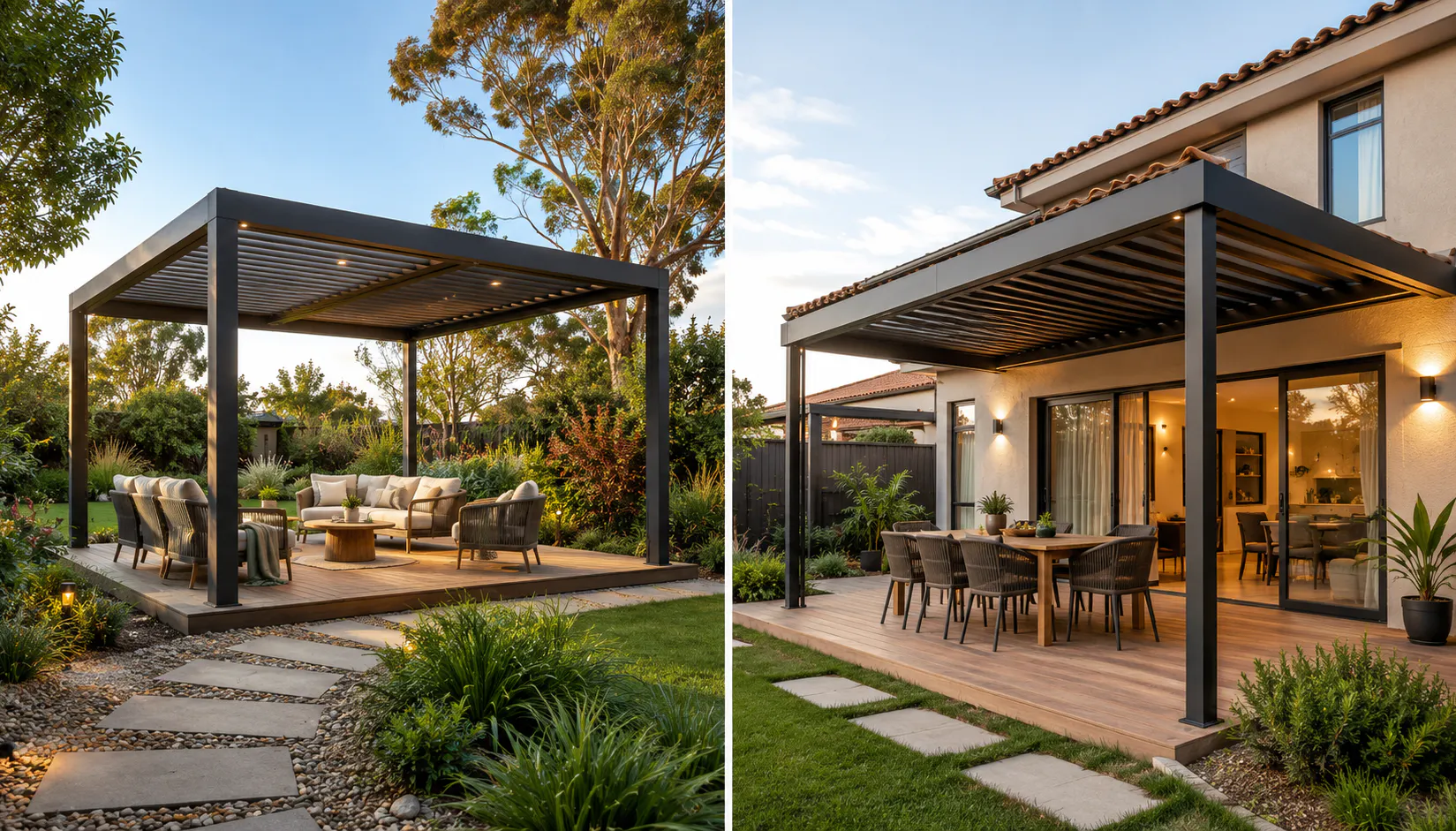
Table of Contents
- 01
- 02
- 03
- 04
- 05
- 06
- 07
- 08
Even though deciding between a freestanding vs attached aluminium pergola might sound like a design preference at first, it's more or less related to how much this new space will contribute to your entertainment. After all, the purpose of adding a pergola to your home is completely lost if you just pick between freestanding and attached based on the outlook alone without giving it some thought on how you'd use it. This guide explains the pros and cons of each type of pergola, the type of roofing you can choose, council building regulations, your budget, and, above all, how your choice should be based on your hobbies and lifestyle.
Key Takeaways
- An attached pergola is the cheaper option because it uses the house wall for support, but that connection limits where it can go.
- A freestanding aluminium pergola can be built anywhere in the yard and never touches the house, although it costs more because it stands on its own posts and footings.
- Once you add an insulated roof, either type may require council approval in NSW.
Freestanding vs Attached: The Quick Answer
If your patio is small or sits right off the house, an attached aluminium pergola is usually the better fit. If your yard is bigger and the best spot is away from the wall, freestanding tends to win.
An attached pergola works when the space is an extension of your kitchen or living room. It saves room and feels like part of the house rather than something parked in front of it.
Whereas a freestanding aluminium pergola gives you placement freedom. You can put it up where you want in your yard, besides the lawn, near the pool, or deeper in the garden. As long as you’ve got the right space, a freestanding aluminium pergola is a suitable choice.
The Structural Difference Between Freestanding and Attached Aluminium Pergolas
The difference in how these two varieties are built structurally is simple.
An attached pergola is fixed to your house on one side, usually with a beam bolted to the wall, and stands on posts along the outer edge. With the wall doing half the work, it needs fewer posts.
On the other hand, just as the name implies, a freestanding pergola stands entirely on its own posts and footings. It touches nothing, so you can place it anywhere, but it has to carry its whole weight by itself.
That one structural difference, leaning on the house or standing alone, is where everything else comes from: the cost, the approval, and where you can place the pergola.
Which Type of Pergola Requires Council Approval in Australia?
If you choose an insulated roofing panel for your aluminium pergola, it's no longer treated as an open pergola under Australian building regulations. The local rules that apply for a patio or verandah should be followed. So any pergola, attached or freestanding, requires council approval when an insulated roofing panel is included in the structure.
Not to worry, a freestanding pergola with an insulated panel is usually simpler to approve. The smaller your pergola, the better the chance it falls under exempt development. Do note that these limits vary by state and council.
Since an attached pergola is directly connected to the house, it undergoes more building regulations. Add the insulated roofing and your pergola is now considered similar to a patio.
In NSW, for example, if the pergola connects to your fascia, it has to be installed according to a professional engineer's specifications and can't sit above your gutter line. All additions must be structurally adequate and comply with the Building Code of Australia.
Always confirm the rules for your block with your local council or a private certifier before you lock in the design for a pergola, especially if it has an insulated roofing panel.
Attached vs. Freestanding: The Pergola Cost Comparison
Attached pergolas tend to be cheaper. The house wall carries one whole side, so you need fewer posts and less footing work, which is where a lot of the cost sits.
A freestanding pergola stands on its own posts all the way around. More posts, more footings, more material, so it does cost more to put up.
Despite being cheaper, an attached aluminium pergola has its own complications. It’s connected to the house with the following:
- a receiver channel fixed to the wall (a track that holds the roof's top edge against the house)
- apron flashing (a metal strip that covers the join so rain runs off)
- a fascia bracket (the fixing that ties the frame to your roof edge)
Together they seal the spot most prone to leaks. A freestanding aluminium pergola skips all of it since nothing connects to the house.
So it's not as simple as "attached is cheaper." ‘Attached’ means fewer posts but extra hardware to fix it to the house. ‘Freestanding’ means no wall fixings but more posts and footings to hold it up. What costs less varies based on your site and the type of material you pick for the pergola and posts.
Picking The Roof For Your Aluminium Pergola
Freestanding vs attached only settles the structure of your aluminium pergola. The next decision is what goes on top.
The good news is the roof choice doesn't depend on whether the pergola is freestanding or attached. Both work with the same roofing options. Say you chose insulated panels: either type is sized to your span the same way.
If you want a year-round space you can use through summer and winter, an insulated roofing panel is what gets you there. How to pick the right panel, thickness and profile is a decision in itself.
The Final Checklist: Which Aluminium Pergola Should You Choose?
Use this quick checklist to decide how to choose between a freestanding vs attached aluminium pergola:
Select an attached aluminium pergola if:
- Your patio is small or sits right against the house.
- The space works as an extension of your kitchen or living room.
- You want power, lights or a fan close to existing wiring.
- A well designed walk-through matters, and you can't spare room for extra posts.
Opt for a freestanding aluminium pergola when:
- The best spot in your yard is away from the house.
- You've got the room for a structure that stands on its own.
- You want it as a separate destination, by the pool or deeper in the garden.
- The house wall isn't strong enough to fix, or you'd rather not disturb your home's structure.
Still on the Fence?
The tie-breaker is how you'll use the space day to day. Build the pergola you want to read your favourite book in, or hold a barbeque with friends. Whatever it is you dream of doing in your pergola, choose the type that makes it happen. Looks and cost matter, but the way it feels when you walk into your pergola, the aura that makes you want to stay a little longer, is what makes the investment worth it.
Once you know which way you're leaning regarding a freestanding vs attached aluminium pergola, talk to the Spanmor team to get one sized to your space.
You can call us on (02) 8880 7691 or download the freestanding or attached span guide if you want to work through the numbers yourself first.
Categories
Build Smarter with Aluminium You Can Trust
Dive into expert insights, guides, and practical advice on aluminium framing, decking systems, pergolas, and outdoor living solutions.

Sales Representative
Updated: June 10, 2026
Published: June 10, 2026
Categories
Build Smarter with Aluminium You Can Trust
Dive into expert insights, guides, and practical advice on aluminium framing, decking systems, pergolas, and outdoor living solutions.
 Spanmor Aluminium System - Limited Warranty