
Safety Codes and Compliance for Pergola Construction With Aluminium Posts: The NSW Guide
Published: May 4, 2026

Table of Contents
- 01
- 02
- 03
- 04
- 05
- 06
- 07
- 08
- 09
- 10
The shade and style that comes with the addition of a pergola to your household also brings safety codes and compliance to worry about. Especially if your pergola is constructed with aluminium posts, it simply must meet Sydney’s building regulations. This guide will walk you through the benefits of using aluminium posts for your pergola and the safety standards that apply for this exciting addition to your property.
Key Takeaways
- Aluminium posts are a cost-effective solution for pergolas that meet NSW building codes and safety standards.
- Structural integrity of pergolas relies on correct engineering calculations for wind loads, spans, and footings.
- Anchoring and waterproofing are essential for long-lasting pergolas that are compliant with local council regulations.
- Always check permit requirements before starting your pergola project to avoid costly fines.
Are Aluminium Posts Durable For Your Pergola?
Aluminium posts have highly beneficial properties that make them ideal for outdoor constructions. The main advantages of aluminium posts for your pergola include structural safety and longevity. Unlike timber, which is prone to rotting and pest infestation, aluminium is resistant to corrosion and will not degrade over time. Since a pergola should be able to withstand outdoor effects, aluminium posts are an excellent choice. What’s more, you can easily meet safety standards and local building codes with a lightweight yet strong solution for your pergola. When your pergola is installed with well-engineered aluminium posts, they remain stable and safe for years to come.
Sydney and NSW Building Regulations for Pergolas
Building regulations for pergolas depend on factors such as the size, location, and height of the structure. If your pergola meets the following criteria, you can build it without council approval as it qualifies as exempt development under the State Environmental Planning Policy:
- Floor area of no more than 25 m².
- Height of no more than 3 m above existing ground level.
- Floor height no more than 1 m above ground level.
- Located behind the building line of the primary road or street.
- Maintained setback distances from property boundaries with at least a 900 mm boundary setback in residential zones, which extends to 5 m in certain rural zones.
All the above conditions should be met to be free of council approval. Additionally, structures built with metal components must use low-reflective, factory pre-coloured materials.
If your pergola does not meet all of the exempt development standards, you’ll have to either obtain a Complying Development Certificate (CDC) or a Development Application (DA) with your local council.
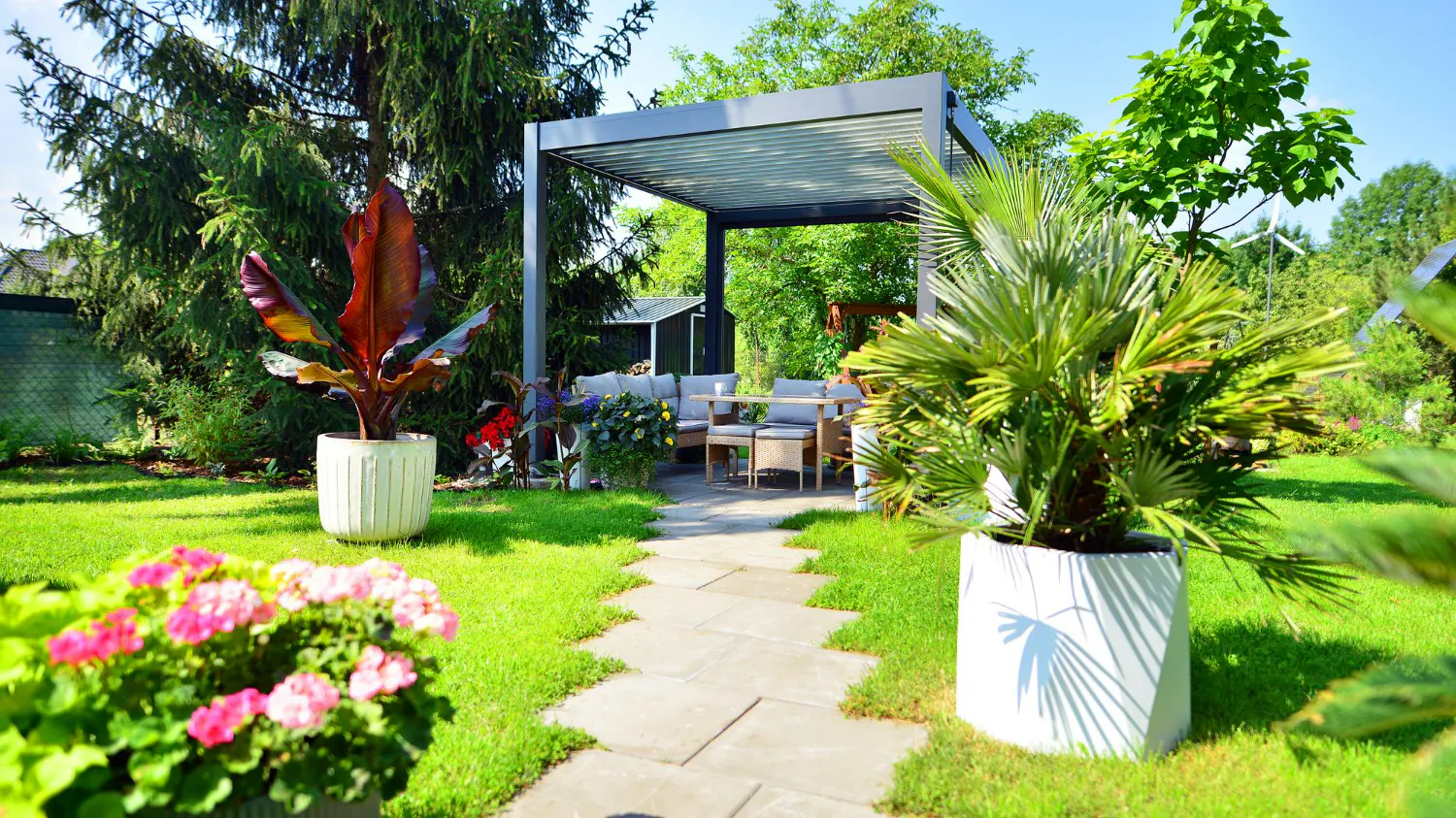
Structural Compliance and the National Construction Code (NCC)
The safety of your pergola depends on how structurally sound it is. Aluminium posts used to build it should be able to withstand environmental forces such as wind and snow loads.
In particular, the pergola must comply with the National Construction Code (NCC) published by the Australian Building Codes Board (ABCB) that establishes national requirements for structural safety for Class 10a buildings. Freestanding structures such as pergolas belong to this category.
These are the most important structural design requirements you should know:
- Wind loads: Structures must be designed to resist wind pressures applicable to the site’s specific wind region. Australian Standard AS/NZS 1170.2 outlines how wind loads must be calculated and accounted for in structural design.
- Structural adequacy: Pergolas must be structurally adequate for all relevant loads, including dead loads, live loads, wind loads, as well as any additional attachments like screens or roofs.
- Engineering certification: As discussed earlier, if your pergola exceeds exempt limits, you’ll need an engineering certification and stamped structural drawings. These drawings demonstrate that the aluminium posts and overall structural system have been designed in accordance with the NCC and relevant standards.
- Complying with Australian standards: There isn’t a dedicated NCC clause for pergolas. However, compliance with broader structural requirements for safe design and construction should be demonstrated through engineering calculations and documentation.
Always ask suppliers to provide stamped structural drawings for your pergola to make sure it complies with the relevant NCC codes.
What Happens When You Ignore Permit Requirements?
Permit requirements are needed in terms of meeting local building standards that comply with NSW building codes. Not checking and confirming the permit requirements eventually leads to several consequences:
- Fines and penalties: Councils can issue fines if a pergola is constructed without approval.
- Stop-work orders: If the structure is found to be non-compliant, work can be halted, leaving your project unfinished.
- Removal orders: In some cases, non-compliant pergolas may be required to be dismantled at your expense, which can cause both financial and emotional strain.
Even if you believe your pergola might be exempt, it’s always worth confirming with your local council or a private certifier to avoid any potential future issues.
Footing and Anchoring Compliance for Aluminium Posts
Aluminium posts remain stable only if there’s proper footing and anchoring. The importance of anchoring cannot be emphasised enough when it comes to aluminium posts. Pergolas become unstable in high winds or during extreme weather conditions without proper anchoring. Footing requirements for pergolas with aluminium posts are explained below:
Concrete footings should be at least 25–40 cm in diameter and 30–120 cm deep, depending on soil conditions and local frost depths.
Deck-mounted pergolas require through-bolts to connect aluminium posts securely to existing joists.
Ground anchors can be used for smaller or temporary pergolas but are unsuitable for high-wind zones.
Spanmor aluminium post solutions are designed to integrate seamlessly with these anchoring systems, ensuring that your pergola meets NSW safety standards and remains safe and secure.

How Wind Zones Affect Span Requirements for Aluminium Posts in Your Pergola
When designing pergolas in NSW, the wind region where your property is located directly impacts how aluminium posts must be engineered. Under the national structural design standard AS/NZS 1170.2:2021, every site is classified into a wind region based on long‑term meteorological data.
Each wind region corresponds to a design wind speed that engineers use to calculate wind forces. There are two main wind regions in New South Wales:
- Wind Region A - Most of inland NSW and the southern coastal areas fall into this category. Structurally, Region A has the lowest design wind speeds.
- Wind Region B - Northern NSW coastal strips and parts of the mid-north coast are in Region B, where higher wind speeds are expected compared with inland areas.
Region A has a regional wind speed of around 146 km/h, while region B’s wind speed is around 187 km/h. Structural engineers use the wind region classification along with the terrain category to determine design wind pressures and forces that pergola aluminium posts must resist.
If your pergola is being built in a higher-wind region, you’ll require closer aluminium post spacing with heavier bracing to handle stronger forces.
Even in region A, where wind speed is lower, aluminium posts should be sized to remain stable under the calculated design wind pressure.
Fixings and Waterproofing for Aluminium Posts Used in Your Pergola
Aluminium posts are fixed to the ground or the existing structure of the pergola with brackets and waterproofing barriers. This is to make sure that moisture wicking is avoided in addition to providing a continuous load path.
It’s always advisable to choose aluminium posts that come with built-in moisture protection, which helps prevent water damage and ensures your pergola remains safe and compliant with building codes.
For additional tips on maintaining the structural integrity of your aluminium posts for pergola, check out our detailed guide on maintenance tips for aluminium posts. Providing proper care is key to maintaining your pergola in top condition as the years fly by.
Build With Spanmor’s Aluminium Posts for Compliance and Safety
Choosing aluminium posts for your pergola vastly improves its safety and durability. With Spanmor’s engineered aluminium post systems, you can be confident that your pergola meets all the necessary Sydney building codes and safety standards.
Whether you need assistance with design or engineering drawings, Spanmor is here to help you build a pergola that’s both beautiful and compliant.
Ready to get started? Contact Spanmor today to discuss your pergola project and explore our range of durable, code-compliant aluminium posts.
Categories
Build Smarter with Aluminium You Can Trust
Dive into expert insights, guides, and practical advice on aluminium framing, decking systems, pergolas, and outdoor living solutions.

Sales Representative
Updated: May 4, 2026
Published: May 4, 2026
Categories
Build Smarter with Aluminium You Can Trust
Dive into expert insights, guides, and practical advice on aluminium framing, decking systems, pergolas, and outdoor living solutions.
 Spanmor Aluminium System - Limited Warranty